Grenada: The Duo Font That Adds Instant Warmth
There’s a specific challenge in modern typography: finding a typeface that feels personal without sacrificing professionalism. We’ve all seen the script font that looks too chaotic for a business card, or the display font that feels too stiff for a wedding invitation. When you are building a brand identity, you need that sweet spot—something that feels human, approachable, and versatile. Enter Grenada, a premium font designed to bridge the gap between casual friendliness and polished branding. It’s not just a single file; it’s a cohesive system featuring a flowing script and a matching set of dingbats, specifically engineered to work in harmony.
The Anatomy of a Friendly Brand
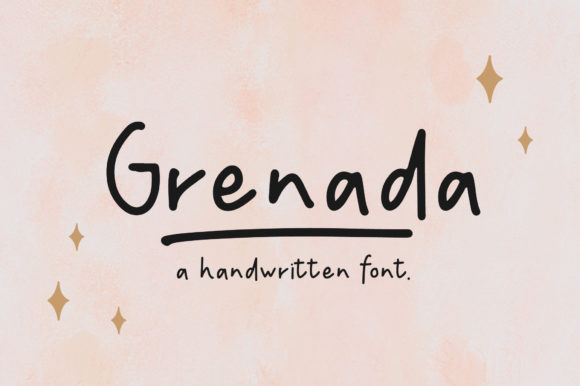
Understanding the visual character of Grenada is about appreciating its restraint. It is a handwritten font, but it avoids the messy, scratchy aesthetic that often plagues this category. Instead, Grenada offers smooth, rounded edges and a steady baseline. It possesses a "bouncy" quality typical of contemporary script fonts, where letters dance slightly above and below the line, but it does so with enough structure to remain legible even at smaller sizes. This makes it an excellent choice for logo design where the name needs to feel inviting but still readable in a social media profile picture.
The true magic, however, lies in the included dingbat style. When you purchase a standard serif font or sans serif font, you get letters and numbers. With Grenada, you get a vocabulary of visual accents. These aren't generic design assets; they are stylistically matched flourishes, swashes, and motifs that complement the script perfectly. For a content creator or blogger, this is invaluable. It allows you to create custom dividers, bullet points, or background patterns that look like they were hand-drawn specifically for your layout, ensuring your visual hierarchy is both unique and consistent.
Practical Applications: From Screen to Shelf
When evaluating a creative font like Grenada, you have to look at where the rubber meets the road. How does it actually perform in the wild?
In the realm of packaging design, Grenada shines. Imagine a boutique coffee brand or a homemade soap line. The script style can carry the product name with an artisanal feel, while the dingbats can be used to stamp "organic" or "handmade" icons that match the typography. This consistency elevates the product from "homemade" to "professional small business." It creates a tactile feel even on a digital screen, which is essential for entrepreneurs selling physical goods.
For web design and digital applications, you need to be mindful of performance, but Grenada works beautifully for high-impact moments. It is an ideal candidate for hero section headlines, call-to-action buttons, or limited-time offer banners. Because it is a display font, it grabs attention immediately. However, it is crucial to pair it correctly. A common mistake is pairing a script with another decorative font. Instead, combine Grenada with a clean, geometric sans serif font for body copy. This contrast allows the personality of Grenada to pop without overwhelming the reader's eye.
Strategic Pairing and Visual Hierarchy
Effective font pairing is less about following strict rules and more about creating a conversation between two different voices. Grenada speaks with warmth and fluidity. Therefore, its partner should speak with clarity and neutrality.
Consider a marketing campaign for a lifestyle coach. You might use Grenada for the main hook: "Transform Your Future." The weight and movement of the letters imply action and emotion. Below that, you would use a sturdy, medium-weight sans serif font for the details—the date, the time, the registration link. This creates a clear visual hierarchy. The user’s eye is drawn to the emotional trigger first (Grenada), then naturally flows to the logical information (the sans serif). This technique improves readability and keeps the layout organized.
Furthermore, the dingbat set allows for subtle branding touches that build recognition. If you are a small business owner creating social media graphics, you can use a specific dingbat from the Grenada set as your signature icon. Maybe it’s a small leaf, a star, or a flourish placed next to your handle. Over time, your audience associates that specific shape with your brand, thanks to the consistency provided by the typeface.
Evaluating Fit and Licensing
Before integrating any commercial font into your workflow, a brief evaluation period is necessary. Don't just look at the preview images; download the files and test them in your actual environment.
First, check the readability at the sizes you intend to use. While Grenada is legible for a script, it is still a script. It is not designed for long-form body text in an editorial design context, like a magazine article. It is meant for headers, titles, and short bursts of copy. Test it against your background colors—ensure there is enough contrast so the loops and swashes of the letters don't get lost.
Second, understand the commercial licensing. Most premium fonts come with specific terms regarding how many users can install the file or whether it can be embedded in an app or e-book. Since Grenada is often used for client work—such as creating logos for other businesses—ensure your license covers "print-on-demand" or "logo usage" if that is your business model. Respecting the licensing protects your business legally and supports the type designers who create these design assets.
Final Thoughts on Utility
Grenada is more than just a collection of glyphs; it is a brand identity toolkit. It offers the warmth of a handwritten font with the utility of a professional asset. Whether you are a publisher designing a book cover, a crafter making invitations, or a marketer