Home Kitchen Font Duo: A Hand-Drawn Approach to Authentic Design
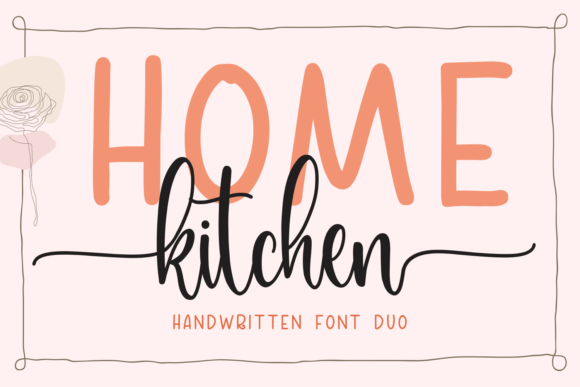
There’s a particular quality in hand-drawn lettering that digital precision often misses. It’s the slight imperfection, the natural flow, the feeling that a human hand was involved in its creation. This is the essence of the Home Kitchen font duo. It’s not a single typeface but a carefully considered pair—a clean, quirky sans serif and a flowing, natural script font—designed to work in concert or stand confidently on their own. The result is a premium font asset that brings warmth, personality, and a touch of handmade charm to any project it graces.
The Anatomy of a Versatile Typeface
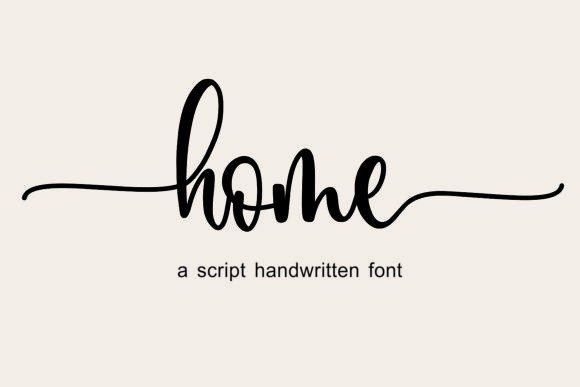
Understanding what makes Home Kitchen effective starts with its two distinct personalities. The sans component is more than just a standard sans serif font; it carries the subtle irregularities of hand-lettering. Characters might have slightly uneven strokes or gentle curves that prevent it from feeling sterile. This makes it exceptionally readable for headlines, subheads, and body text where you want clarity without coldness. The script, on the other hand, is where the personality truly shines. It mimics a relaxed, confident hand, with natural connections and swashes that feel organic rather than overly flourished. This isn’t a formal calligraphic script; it’s a friendly, approachable script font perfect for accents, logos, and invitations.
The real power lies in their pairing. Using them together creates an immediate and effective visual hierarchy. The sans can ground your message with legibility, while the script adds a focal point of elegance or playfulness. This dynamic is fundamental in modern logo design and brand identity, where contrasting yet harmonious elements create memorability. Think of a bakery logo where the business name is in the friendly script and the tagline “Artisan Breads” is in the clean sans below. The pairing communicates both charm and professionalism instantly.
Practical Applications Across Creative Fields
Where does a creative font like Home Kitchen find its home? Its versatility is its greatest strength. For entrepreneurs and small business owners, it’s a toolkit for building a cohesive brand. Use it for packaging design on artisan goods, for menu layouts in a café, or for product labels that need a personal touch. The fonts work beautifully in editorial design for magazines or blogs, especially in lifestyle, food, or craft niches where authenticity is valued. A recipe blog header set in the script, with ingredient lists in the sans, creates an inviting and organized reading experience.
For crafters and hobbyists, the applications are immediately tangible. Wedding invitations, greeting cards, and party decorations gain a bespoke quality. The PUA encoding is a practical detail here—it means all the swashes, alternates, and glyphs are easily accessible in any design software, allowing for customization without technical hurdles. This accessibility is crucial for non-designers who want professional results. Similarly, for social media graphics, the font duo can quickly elevate a post. A quote graphic with the key phrase in script and the attribution in sans looks polished and intentional, improving audience engagement through superior aesthetics.
Making Informed Design Decisions
Choosing a display font or a handwritten font is never just about liking how it looks on a specimen sheet. It’s about evaluating fit. Does the personality of Home Kitchen align with your project’s tone? Its quirky, natural style is perfect for brands and projects that aim to feel approachable, creative, and human. It may be less suited for ultra-corporate or highly technical contexts where a neutral, geometric typeface is expected. Always test it in context. Mock up a business card, a website hero image, or a book cover to see how the typeface performs with your actual content and imagery.
Pay close attention to readability, especially with the script. While excellent for logos and large headings, dense paragraphs set in the script can be challenging to read. This is where the sans companion proves its worth, handling longer text blocks with ease. This consideration is key to maintaining good visual hierarchy and ensuring your message is communicated clearly. Furthermore, understanding the included styles is vital. Does the font family include multiple weights? Are there italic versions? Home Kitchen’s duo structure simplifies this, but reviewing the full character set ensures you can leverage its full potential for font pairing and stylistic variation.
Finally, for any commercial use—from a client’s brand materials to products for sale—verifying the licensing is non-negotiable. A commercial font license provides the legal foundation to use the work professionally. Home Kitchen, as a designed asset, comes with specific terms that protect both the creator and the user. Taking a moment to understand these terms ensures your design assets are used appropriately, safeguarding your projects and your business. When selected thoughtfully and used with intention, a font duo like Home Kitchen becomes more than just letters; it becomes a fundamental component of your creative voice, helping you craft designs that are not only seen but felt.