The Elegance of Happyday: A Modern Handwritten Script Font
Understanding the Visual Character of Happyday
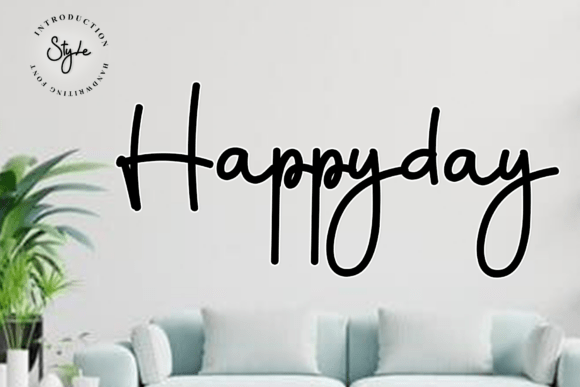
Happyday is more than just a collection of letters; it’s a carefully crafted modern handwritten script font designed to evoke a specific feeling of elegance and authenticity. At its core, this typeface is defined by its beautifully flowing letterforms. Unlike rigid, structured typefaces, Happyday embraces a natural, organic rhythm. Its smooth, generous curves mimic the fluid motion of a skilled hand using a brush or pen, while the graceful, elongated strokes add a sense of movement and sophistication. This isn’t a casual, messy scrawl. It’s a premium font with a polished, professional finish, making it a versatile design asset for projects that demand a touch of luxury without sacrificing legibility.
The personality of Happyday is one of understated confidence. It feels personal and human, yet it carries a distinct air of professionalism. This duality is its greatest strength. It can feel intimate enough for a wedding invitation, yet strong enough to serve as the cornerstone of a brand identity. The overall appeal lies in its ability to convey authenticity and care. When someone sees text set in Happyday, it suggests a human touch, a level of detail, and a commitment to quality that more generic fonts simply cannot communicate. It’s a creative font that doesn’t just display words—it tells a story.
Where Happyday Truly Shines: Practical Applications
Knowing a font looks beautiful is one thing; understanding where to use it effectively is another. Happyday excels in contexts where a personal, luxurious, or authentic message is key. Its strength as a display font makes it ideal for headlines, logos, and hero text on websites, but its applications are surprisingly broad.
In the realm of brand identity, Happyday is a powerful tool. For entrepreneurs, coaches, and personal brands, a logo set in this script font instantly communicates a signature style. It’s perfect for logo design for boutique shops, creative studios, or lifestyle blogs. The font’s elegance translates beautifully to packaging design, especially for artisanal goods, cosmetics, or gourmet products, where shelf appeal is paramount. It suggests the product inside is crafted with care.
For editorial design and publishing, Happyday adds a sophisticated flair. Use it for chapter titles, pull quotes, or magazine headers to break the monotony of body text. In web design, it can create stunning visual hierarchy when used sparingly for key headlines or call-to-action buttons, drawing the eye and setting a luxurious tone. The digital space is equally welcoming; think social media graphics for Instagram stories, Pinterest pins, or YouTube thumbnails where a personal, high-end feel can boost engagement.
Of course, its application in stationery is a natural fit. Luxury wedding stationery—from invitations to menus and thank-you cards—is a classic use case. The font’s flowing nature captures the romance and importance of the event. Similarly, it’s excellent for photography watermarks, adding a professional signature that complements rather than distracts from the image. For crafters and hobbyists, it elevates DIY projects, from custom labels to personalized gifts.
Integrating Happyday into Your Design Workflow
Choosing the right typeface is a critical decision, and integrating a new one like Happyday requires thoughtful consideration. Here’s some practical guidance for designers, marketers, and creators.
Evaluate the Project Fit: Before selecting Happyday, ask if the project’s tone aligns with its personality. Is the goal to feel luxurious, personal, authentic, and elegant? If you’re designing for a corporate law firm or a tech startup focused on minimalism, a sans serif font might be more appropriate. But for a wedding planner, a floral brand, or a personal portfolio, Happyday is an excellent candidate.
Master the Art of Font Pairing: A script font like Happyday is rarely used alone for large blocks of text. Its power is amplified through intelligent font pairing. The general rule is contrast. Pair it with a clean, highly legible sans serif font for body copy to ensure readability. A simple, geometric sans serif can provide a modern counterpoint. Alternatively, pairing it with a classic, sturdy serif font can create a more traditional, luxurious feel. The key is to let Happyday be the star in headlines while the supporting font handles the heavy lifting of paragraphs.
Test for Readability and Hierarchy: Always test the font at the size and on the medium it will be used. While beautiful, handwritten fonts can pose readability challenges at very small sizes or in long sentences. Use Happyday for short bursts of impactful text—headings, logos, short phrases—to maintain clarity. This approach also naturally establishes a strong visual hierarchy, guiding the viewer’s eye to the most important information first.
Review the Included Styles: A professional commercial font like Happyday often comes with more than just the basic letters. Check for stylistic alternates, ligatures, and swashes. These extras are what allow for customization and a more authentic, hand-lettered look. Using alternate characters for key letters can prevent repetition and make your design feel even more unique.
Understand Commercial Licensing: For any project that will be used for commercial purposes—from a client’s logo to product packaging or a monetized blog—it is non-negotiable to use a properly licensed commercial font. This protects you legally and ensures the font creator is compensated for their work. Always purchase and adhere to the license terms provided with the font.
Ultimately, Happyday is a versatile and valuable addition to any designer’s toolkit. Its true power lies in its ability to inject personality and a sense of crafted quality into a project. By using it strategically and pairing it wisely, you can leverage its elegant, flowing character to create designs that are not only beautiful but also deeply effective in connecting with your audience. It’s a modern typography choice that bridges the gap between personal touch and professional polish.